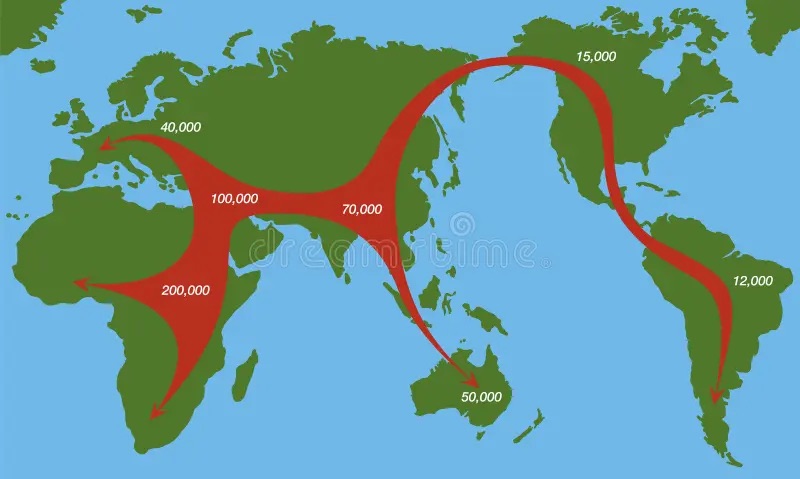
As humans migrated from Africa, they were joined by trillions of gut microbes, according to an October 07 2026 study by Stanford University Medicine.
The study offers insight on how the loss of human gut bacteria through industrialization impacts human biology. It found that many microbial lineages in modern populations have deep evolutionary roots extending back through ancient human migrations.
Lead author and professor of microbiology and immunology, Justin Sonnenburg, PhD. found hundreds of bacterial species that are rare or missing in industrialized microbiomes. “This long-term association has implications for how such recent biodiversity loss in our microbiome may impact our biology and thus our health.”
The Stanford study took researchers to our African origins and includes the microbiome specimens of Tsimane individuals who hosted about 1,400 different species and shared a total of 1,231 of these species (about 90%) with the Hadza. This is telling when compared to the average Californian has only 250 species. The findings of a 90% correlation between Tsimane and Hadza species was somewhat surprising due to their differences in diet. The Hadza were primarily carnivorous while Taimane were vegetarian with limited fish and small forest animals.
The Stanford researchers then asks the hard question, what happens when industrialization wipes out a significant number of these species?
While other studies point toward the loss of microbiome diversity led to increases in diseases, other contributing factors include antibiotic exposure; low-fiber, high-fat and sugar diets, processed food; and sanitized living conditions. It is agreed, research on this must continue.
https://med.stanford.edu/news/all-news/2026/10/gut-microbiome-migration.html


